Leak Detection and Repair in Pittsburgh Pennsylvania

Pittsburgh Residential & Commercial Plumbing Services
Built on Service. Driven by Integrity.
Call us
412-694-3938
Leak Detection and Repair in Pittsburgh Pennsylvania
Pittsburgh’s neighborhoods each present unique leak detection challenges. Century-old row houses in the South Side contain original plumbing that has served generations. Victorian homes in Shadyside feature complex supply systems added over decades of renovations. Downtown high-rises and Strip District restaurants operate extensive commercial plumbing around the clock. This architectural diversity means no single approach works for every property. Kaleb’s Kustom Plumbing brings specialized leak detection expertise to Pittsburgh’s varied building stock. We locate problems without unnecessary demolition, then complete repairs that protect your investment.
Warning Signs That Water Is Escaping in Your Pittsburgh Property
Hidden leaks reveal themselves through indirect clues rather than visible water. These symptoms indicate professional detection is needed.
-
Water bills climbing without usage changes
-
Meter spinning after all fixtures shut off
-
Musty odors concentrating in basements or lower levels
-
Baseboards warping or paint bubbling on walls
-
Warm patches appearing on floors
-
Pressure dropping at one fixture only
-
Foundation cracks developing suddenly
Early detection prevents minor drips from causing major structural damage.
Why Pittsburgh Properties Develop Hidden Leaks
The city’s diverse architecture creates specific vulnerabilities based on construction era and building type.
Original Galvanized Steel in Historic Homes
Century-old homes throughout Pittsburgh still contain original galvanized steel supply lines. After decades of service, these pipes corrode internally until water barely flows. Complete replacement often becomes necessary.
Copper Pipes Developing Pinhole Leaks
Homes from the mid-twentieth century feature copper supply lines. After fifty years of service, interior walls thin and develop pinhole leaks that drip inside walls.
Hillside Soil Movement Stressing Pipes
Pittsburgh’s famous hillsides mean soil constantly shifts. This movement stresses underground pipes, creating cracks and joint separations where leaks develop.
Mature Tree Root Intrusion
Pittsburgh’s tree canopy creates extensive root systems. These roots seek moisture relentlessly, cracking buried pipes and crushing smaller lines over time.
Freeze-Thaw Cycles Weakening Connections
Repeated freezing and thawing weakens pipe walls and joint connections. Pittsburgh experiences numerous freeze-thaw cycles annually.
High-Volume Commercial System Demands
Downtown restaurants and hotels operate plumbing continuously. Constant use stresses joints and fittings, eventually causing failures.
The Equipment That Finds Leaks Without Damage
The point of modern leak detection is to locate the problem precisely before opening anything up. Several tools make that possible.
Acoustic listening. A sensitive microphone picks up the sound of water escaping a pipe. The sound is loudest near the leak. This works for pipes inside walls and under slabs.
Thermal imaging. For hot water leaks, a thermal camera shows temperature differences on the surface. A warm spot on a floor or wall often points directly to the leak.
Pressure testing. We isolate specific sections of plumbing and pressurize them to confirm whether a leak exists in that section. This narrows down the location quickly.
Moisture meters. These detect elevated moisture behind walls, under floors, and around fixtures.
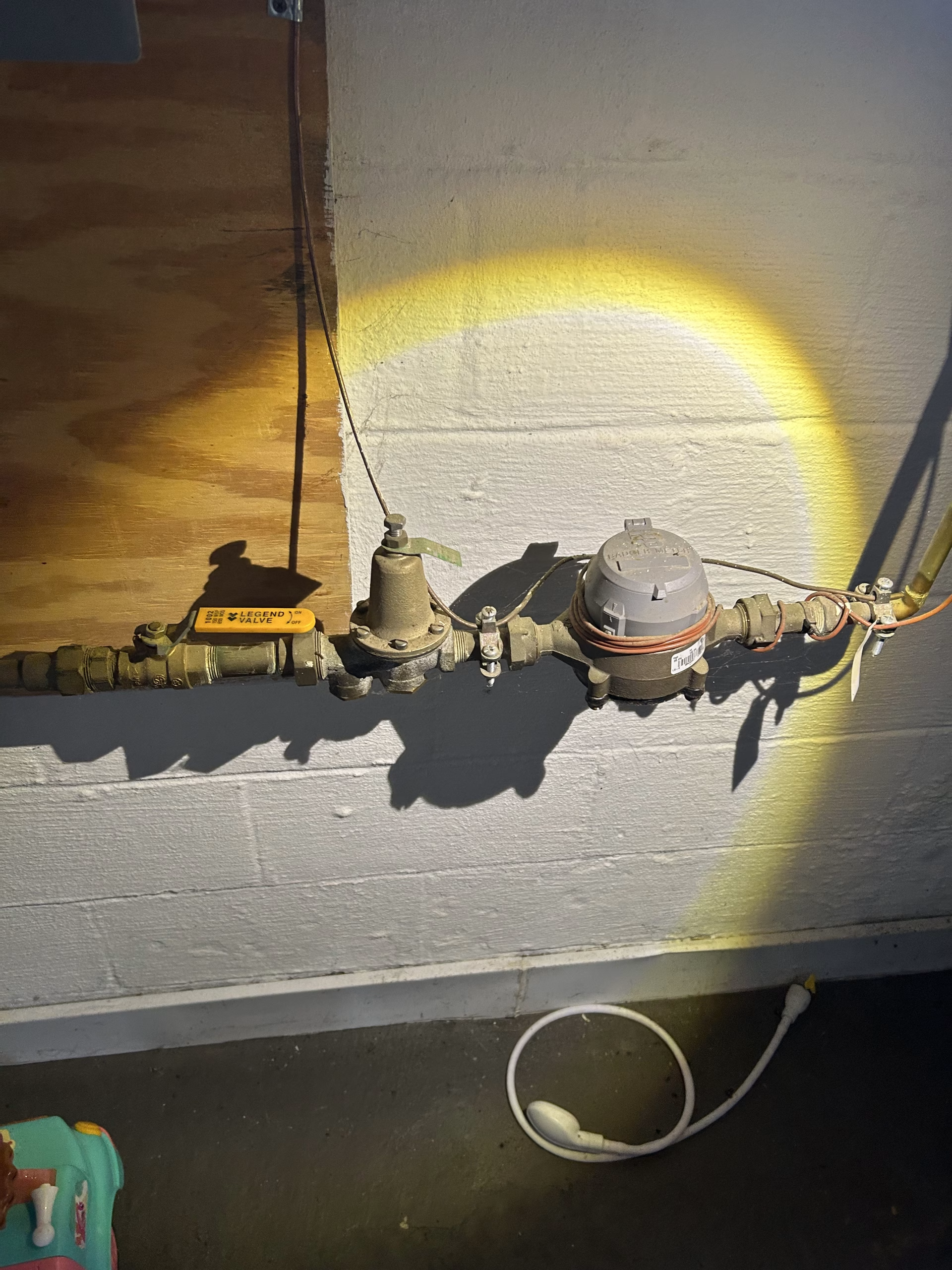
Water meter monitoring. The simplest tool is often the most useful. If the meter spins with everything off, there is a leak. Shutting off sections one by one narrows down which part of the system is leaking.
We use the combination that fits the situation. Not every leak requires every tool. The goal is to find the source quickly and accurately.
The Sequence of a Leak Detection Appointment
Every job starts with a conversation about what you have noticed. The water bill, the smell, the warm spot — those details matter.
When we arrive, the first step is confirming there is a leak. We check the water meter with everything off. If it spins, water is moving. We then isolate sections to narrow down the general area.
Once we know which section is leaking, we use acoustic and thermal equipment to pinpoint the exact spot. This usually takes one to two hours.
When we have the location, we explain what we found. If the leak can be repaired during the same visit, we do it. If the repair requires opening drywall or concrete, we schedule a separate visit and tell you exactly where we will need access.
The Leaks We Find Most Often in Pittsburgh Pennsylvania
Different situations call for different approaches. Here are the most common leaks we encounter.
Slab leaks. Pipes running under the concrete slab develop leaks from corrosion or ground movement. Signs include warm floor spots and higher water bills. Detection uses acoustic equipment and thermal imaging.
Wall leaks. Supply or drain lines inside walls can leak for months before showing. Detection uses acoustic listening and moisture meters. We pinpoint where to open the wall.
Toilet leaks. A worn flapper can waste hundreds of gallons a day without any visible sign. We confirm the leak during the visit.
Fixture leaks. Supply lines under sinks and behind appliances leak slowly. Some are visible; others hide behind cabinet panels.
Irrigation leaks. Outdoor irrigation lines are a common source of hidden loss. The water meter tells us if the leak is in the irrigation system.
Water heater leaks. Pinhole leaks in the tank drip slowly into the drain pan. We inspect the tank, fittings, and T&P valve.
Water main leaks. The line from the meter to the house can develop leaks from roots, corrosion, or ground movement. Our water main repair page covers that repair.
After the Leak Is Found: Repair Options
The repair depends on what is leaking. Most leaks can be repaired without major demolition. Common repairs include:
-
Replacing a section of corroded pipe
-
Repairing a fitting or joint
-
Replacing a failed supply line
-
Replacing a toilet flapper or fill valve
-
Replacing a leaking water heater
-
Repairing a section of water main (see our water main repair page)
If the leak has damaged a drain or sewer line, our sewer camera inspection confirms the condition of the pipe before any repair.
Homes and Businesses We Serve in Pittsburgh Pennsylvania
We locate leaks in residential and commercial properties.
Residential leak detection covers single-family homes, townhomes, and condos. Slab leaks and wall leaks are the most common in Pittsburgh Pennsylvania.
Commercial leak detection serves offices, retail spaces, restaurants, and multi-unit buildings. Larger plumbing systems have more places for leaks to develop. See our commercial plumbing page for the full scope of commercial services.
Questions Pittsburgh Pennsylvania Homeowners Ask
How do you find a leak without tearing up my house?
We use acoustic listening equipment, thermal imaging, and pressure testing to locate the leak from the surface. In most cases, we can pinpoint the leak without opening any walls or floors.
How much does leak detection cost in Pittsburgh Pennsylvania?
Cost depends on the complexity of the situation and how many methods are needed. Contact us to discuss your specific symptoms and get an estimate.
Can you detect a slab leak?
Yes. Slab leaks are one of the most common hidden leaks we find. We use acoustic equipment and thermal imaging to locate them.
What is a slab leak?
A slab leak is a leak in a pipe running under the concrete slab of a home. It is often caused by corrosion in older copper pipes.
How do I know if my toilet is leaking?
A leaking toilet often runs silently into the bowl. You can test by adding food coloring to the tank and checking the bowl after 15 minutes. If the color appears without flushing, the flapper is leaking. We can also confirm during a service call.
Do you repair the leak after finding it?
Yes. Most leaks can be repaired during the same visit. If the repair requires opening walls or concrete, we schedule it as a separate visit so you know what to expect.
Do you offer leak detection for commercial properties in Pittsburgh Pennsylvania?
Yes. Commercial leak detection is part of our commercial plumbing services. Commercial systems often have more places for leaks to develop.
Areas We Serve
Kaleb’s Kustom Plumbing serves Pittsburgh Pennsylvania and surrounding communities. We also serve Allegheny, Beaver, Butler, and Washington counties.
Our service area includes:
If you are not sure whether we serve your area, give us a call at (412) 694-3938.