Leak Detection and Repair

Pittsburgh Residential & Commercial Plumbing Services
Built on Service. Driven by Integrity.
Call us
412-694-3938
Leak Detection and Repair
Water leaks do not always announce themselves with a puddle on the floor. Some leaks hide inside walls, under concrete slabs, or in the space between floors. You may notice higher water bills, a damp smell, or the sound of running water when nothing is turned on. What you cannot see is what is causing the problem. And that is exactly why leaks keep getting worse.
Kaleb’s Kustom Plumbing provides leak detection and repair for homes and businesses across Pittsburgh and the surrounding communities. We use professional detection equipment to locate the leak without tearing apart your home. Once we know where the problem is, we fix it and confirm the repair.
Signs You Have a Hidden Leak
Not every leak is obvious. Some leak slowly for weeks or months before they cause visible damage. These are the signs that should prompt a call.
-
Higher than normal water bills with no change in usage
-
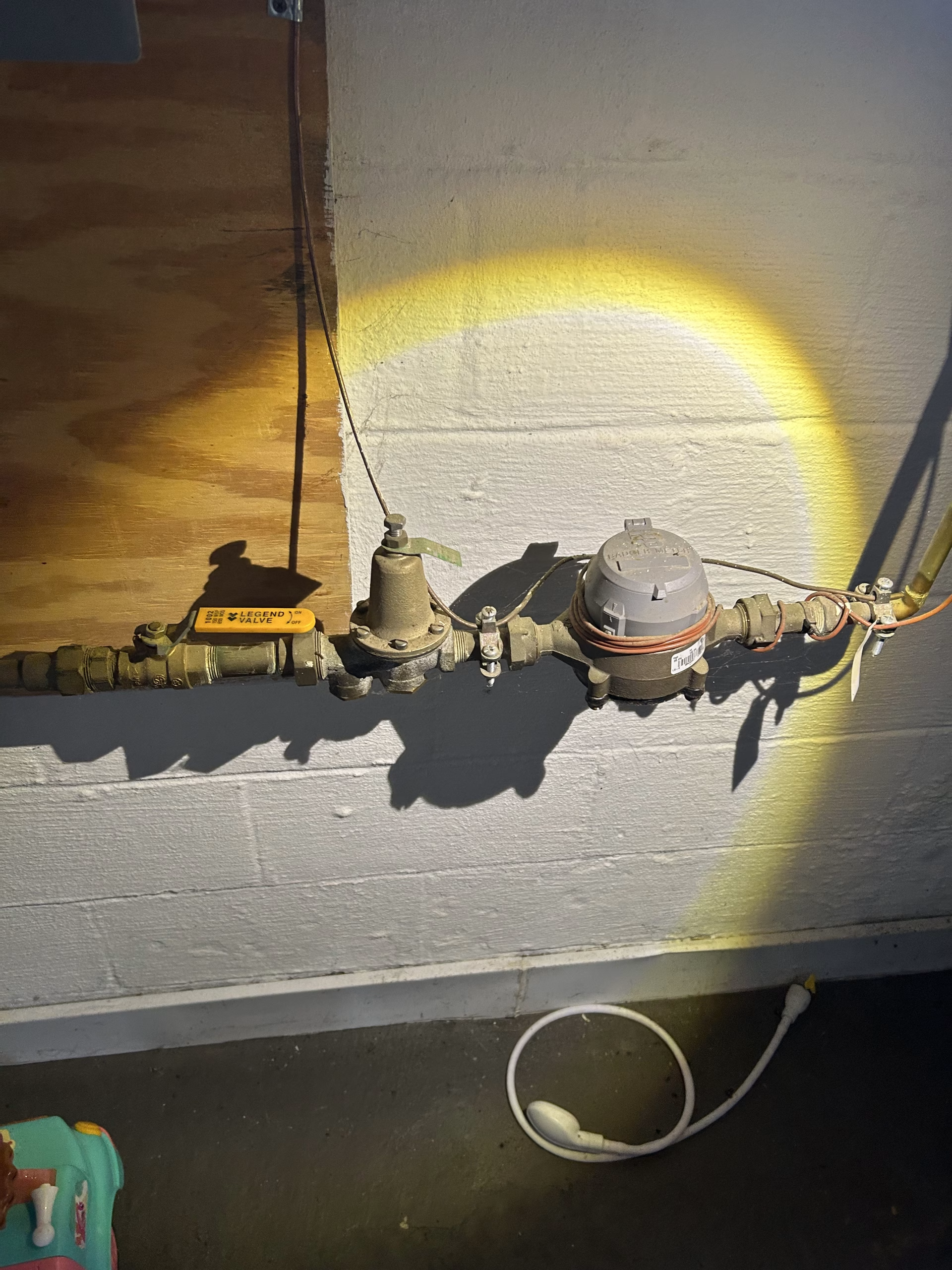
A water meter that keeps spinning when no water is being used
-
Damp spots on walls, ceilings, or floors
-
Peeling paint or warped baseboards
-
Musty or moldy odors that do not go away with cleaning
-
Sound of running water when everything is turned off
-
Warm spots on the floor (often indicates a hot water slab leak)
-
Reduced water pressure in one or more fixtures
-
Cracks in the foundation or slab
Ignoring these signs allows water to damage drywall, insulation, flooring, framing, and in some cases the foundation. Catching the leak early usually means a smaller repair and less property damage.
How Leak Detection Works
The goal of leak detection is simple. Find the leak without causing unnecessary damage. That means starting with non-invasive methods before opening anything up.
Step 1 — Confirm there is a leak. We start by checking the water meter with everything in the house turned off. If the meter still spins, water is moving somewhere. That confirms a leak.
Step 2 — Isolate the system. We shut off sections of the plumbing — the irrigation system, the water heater, individual fixtures — to narrow down where the water is escaping.
Step 3 — Listen for the leak. We use acoustic listening equipment to hear the sound of water escaping a pipe. The sound is strongest near the leak. This works well for pipes inside walls and under slabs.
Step 4 — Thermal imaging. For hot water leaks, thermal imaging can show temperature differences on walls or floors that reveal where the leak is located.
Step 5 — Pressure testing. For specific lines, we isolate and pressure test to confirm the location of the leak.
Step 6 — Confirm and repair. Once we have located the leak, we explain what we found and how the repair will be handled.
In most cases, we can find the leak without opening any walls or floors. When we do need to open a wall, we know exactly where to open it.
What Causes Hidden Leaks
Leaks do not appear for no reason. Several conditions lead to hidden leaks over time.
Pipe corrosion. Older copper and galvanized steel pipes corrode from the inside. The walls thin until they develop pinhole leaks.
High water pressure. Water pressure that exceeds the safe range stresses pipe joints and can cause premature failure.
Ground movement. Shifting soil or settling foundations can crack or loosen buried pipes.
Temperature changes. Freezing and thawing cycles expand and contract pipes, weakening joints.
Tree roots. Roots can crush or crack underground pipes. See our sewer line repair page for more.
Wear on aging fixtures. Old shutoff valves, supply lines, and seals eventually fail.
Repair Options After Detection
Once we know where the leak is, the repair depends on what is leaking. Common repairs include:
-
Replacing a section of corroded pipe
-
Repairing a specific fitting or joint
-
Replacing a failed supply line
-
Fixing a toilet flapper or fill valve
-
Replacing a water heater if the tank is leaking
-
Repairing or replacing a section of water main (see our water main repair page)
For larger projects involving repiping or extensive damage, we discuss options and provide a clear estimate before work begins. If the leak has caused damage that involves sewer or drain lines, our sewer camera inspection can confirm the condition of the pipe.
Residential and Commercial Leak Detection
We locate leaks in homes and businesses.
Residential leak detection covers single-family homes, townhomes, and condos. Slab leaks, wall leaks, and fixture leaks are the most common.
Commercial leak detection serves offices, retail spaces, restaurants, and multi-unit buildings. Larger plumbing systems have more places for leaks to develop. See our commercial plumbing page for the broader scope of commercial services.
What to Expect During Service
When you call, we ask about the symptoms and when you first noticed them. For active leaks, we schedule the service promptly.
When we arrive, we confirm the leak using the meter and then use detection equipment to locate it. Most detection work takes one to two hours. Once we know where the leak is, we explain the repair options and provide an estimate.
If the leak can be repaired during the same visit, we do it. If the repair requires opening walls or concrete, we schedule it as a separate visit so you know what to expect.
Areas We Serve
Kaleb’s Kustom Plumbing serves Pittsburgh and the surrounding communities. We also serve Allegheny, Beaver, Butler, and Washington counties.
Our service area includes:
If you are not sure whether we serve your area, give us a call at (412) 694-3938.
Types of Leaks We Find
Different types of leaks require different detection methods. Here are the most common ones.
Slab leaks. These are leaks in pipes running under the concrete slab of your home. They are common in older homes with copper pipes. Signs include warm spots on the floor (hot water slab leaks), unexplained higher water bills, and cracks in the slab. Slab leaks are detected with acoustic equipment and thermal imaging.
Wall and ceiling leaks. These are leaks in supply lines or drain lines running through walls or above ceilings. Signs include water stains, peeling paint, and damp drywall. Acoustic equipment and moisture meters help pinpoint the location.
Toilet leaks. Toilets can leak at the flapper, fill valve, or seal. Some toilet leaks run silently into the bowl and are invisible. A flapper leak can waste hundreds of gallons per day. We can quickly confirm whether a toilet is leaking.
Faucet and fixture leaks. Supply lines under sinks, shower valves, and outdoor spigots can leak slowly for years. Most are visible when you look for them, but some are hidden behind cabinet walls.
Irrigation system leaks. Outdoor irrigation systems are a common source of hidden leaks. Shutting off the system and watching the water meter tells us whether the leak is in the irrigation line.
Water heater leaks. Water heater tanks can develop pinhole leaks that drip slowly into the drain pan or floor. We inspect the tank, fittings, and T&P valve.
Water main leaks. The line between the water meter and the house can develop leaks from ground movement, corrosion, or root intrusion. Our water main repair page covers that service.
Frequently Asked Questions
How do you find a leak without tearing up my house?
We use acoustic listening equipment, thermal imaging, and pressure testing to locate the leak from the surface. In most cases, we can pinpoint the leak without opening any walls or floors.
How much does leak detection cost?
Cost depends on the complexity of the situation and how many methods are needed. Contact us to discuss your specific symptoms and get an estimate.
Can you detect a slab leak?
Yes. Slab leaks are one of the most common hidden leaks we find. We use acoustic equipment and thermal imaging to locate them.
What is a slab leak?
A slab leak is a leak in a pipe running under the concrete slab of a home. It is often caused by corrosion in older copper pipes.
How do I know if my toilet is leaking?
A leaking toilet often runs silently into the bowl. You can test by adding food coloring to the tank and checking the bowl after 15 minutes. If the color appears without flushing, the flapper is leaking. We can also confirm during a service call.
Do you repair the leak after finding it?
Yes. Most leaks can be repaired during the same visit. If the repair requires opening walls or concrete, we schedule it as a separate visit so you know what to expect.
Do you offer leak detection for commercial properties?
Yes. Commercial leak detection is part of our commercial plumbing services. Commercial systems often have more places for leaks to develop.